
Notes on the development of an experimental film
TEXT: Anita Spooner
IMAGES: Sabina Maselli, unless stated otherwise
★
people of the jury, we ask:
★
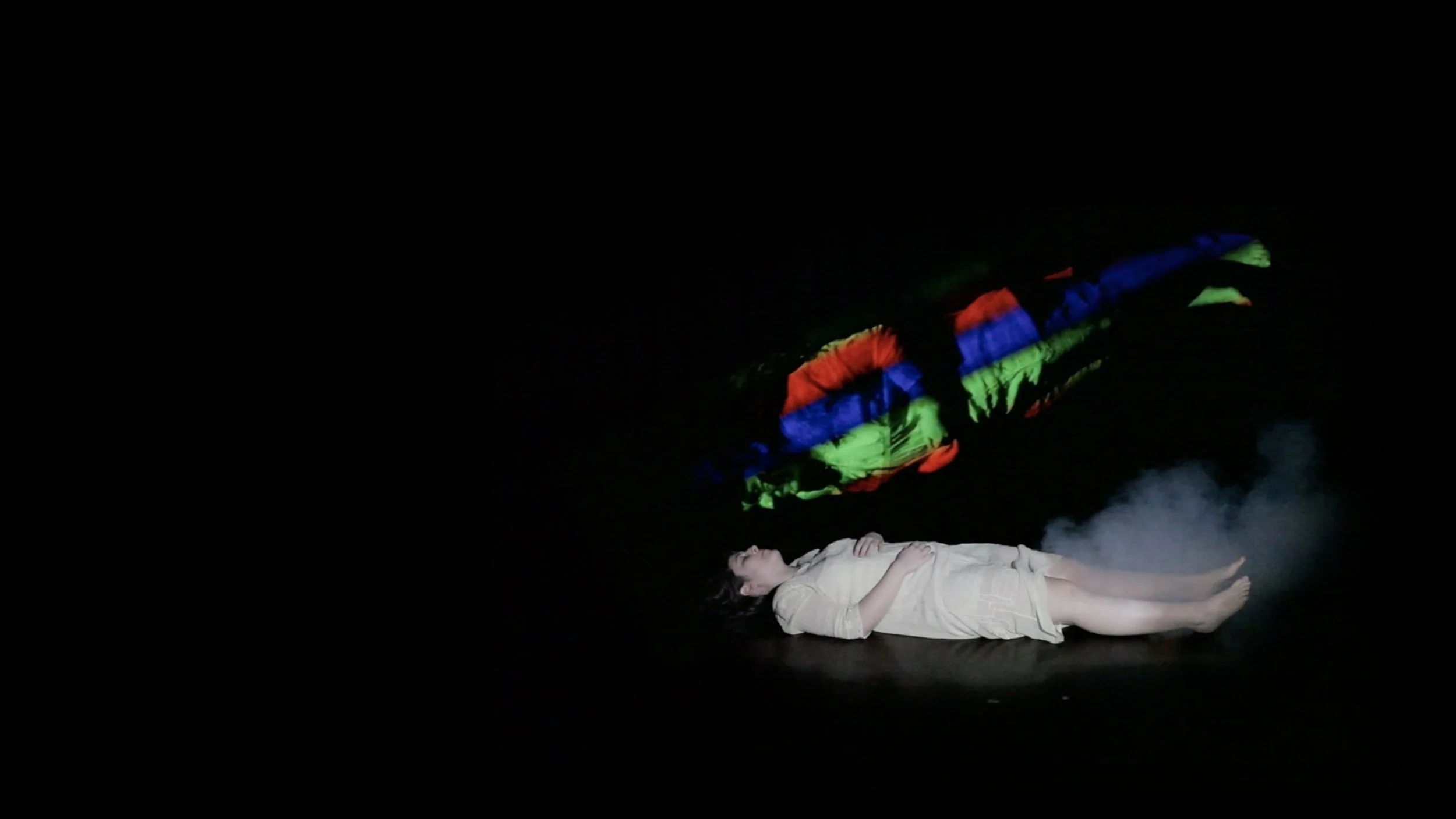
consider the subtle body—a liminal, intermediary body—a vehicle for the soul to move between physical and spiritual realms
★
my subtle double
IMAGES: Sabina Maselli, unless stated otherwise
★
people of the jury, we ask:
★
consider the subtle body—a liminal, intermediary body—a vehicle for the soul to move between physical and spiritual realms
★
my subtle double
In Carl Jung’s words:
★
an ancient question—what is the relationship between matter and mind?
★
As critic Michael Silverblatt says in an interview with poet Mary Ruefle:
★
maybe a little more slant
★
It is beyond our grasp per definition; the subtle body is a transcendental concept which
cannot be expressed in terms of our language or our philosophical views, because they are
all inside the categories of time and space.
★
an ancient question—what is the relationship between matter and mind?
★
As critic Michael Silverblatt says in an interview with poet Mary Ruefle:
Losing and finding and losing and finding,
which you say is essentially the action of the poem itself, breathing.
★
Act I: Set up
Act II: Confrontation
Act III: Resolution
★Act II: Confrontation
Act III: Resolution
FADE IN:
maybe a little more slant
★
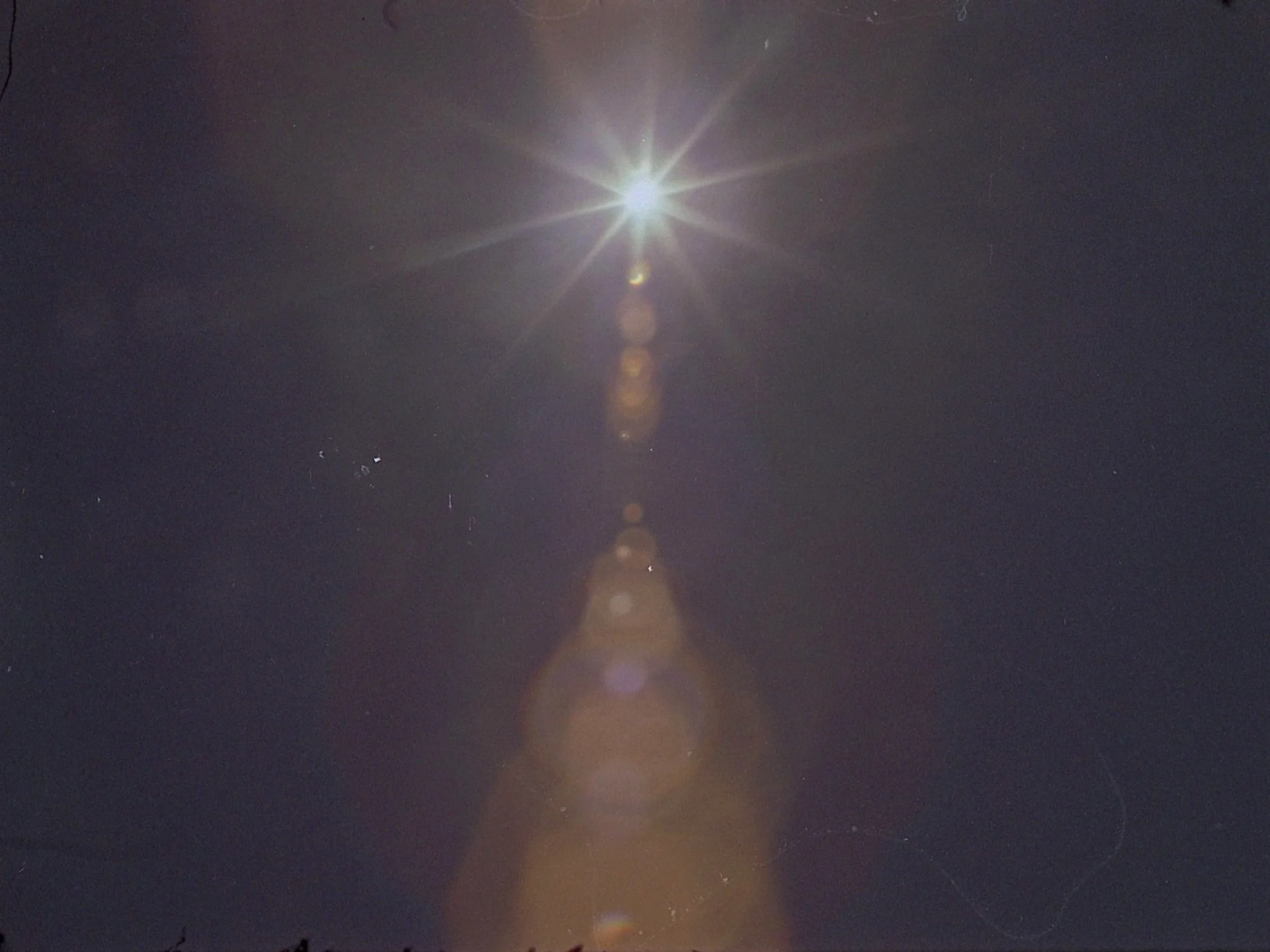
[widening aperture]
★
a latent trace
★
an infinite regress of objection
★
The subtle body, scholar Simon Cox claims, is a near-ubiquitous phenomenon through history, appearing in Indic, Egyptian, Tibetan, Chinese and ancient Greek texts, up to the modern occult.
★
Why is it that in Western society, children are raised to believe in magic, only for an eventual dismantling of their belief as they age? Why do we take away the enchanted forest, Santa Claus and the tooth fairy?
★
enforced disenchantment
a cultural rite, of losing faith
★
★
hold on to the silver cord
★
the subtle body is also defined by lack
★
★
my body felt heavy after travelling
what happens to your voice in the astral plane?
language is coded
★
a correspondence between inner and outer worlds—astral travel affirms the Hermetic maxim, As above, so below; as within, so without—the soul and the heavens of the same thread
★
★
We hope to show how the psyche is ontologically entangled in the universe—the collapse of subject & object or thought & world, the experience of being fractal—
★
a latent trace
★
an infinite regress of objection
★
The subtle body, scholar Simon Cox claims, is a near-ubiquitous phenomenon through history, appearing in Indic, Egyptian, Tibetan, Chinese and ancient Greek texts, up to the modern occult.
★
Why is it that in Western society, children are raised to believe in magic, only for an eventual dismantling of their belief as they age? Why do we take away the enchanted forest, Santa Claus and the tooth fairy?
★
enforced disenchantment
a cultural rite, of losing faith
★
If one were to dwell in the oceanic state indefinitely, then one would never experience the wrenching separation that paradoxically may animate signification.
—Jackie Wang, scholar and poet
★
hold on to the silver cord
★
the subtle body is also defined by lack
★
[low hums, indiscernible voice, interruptions of crisp pop
sounds]
★
my body felt heavy after travelling
what happens to your voice in the astral plane?
language is coded
★
a correspondence between inner and outer worlds—astral travel affirms the Hermetic maxim, As above, so below; as within, so without—the soul and the heavens of the same thread
★
with a bit of vertigo
★
We hope to show how the psyche is ontologically entangled in the universe—the collapse of subject & object or thought & world, the experience of being fractal—
★
★
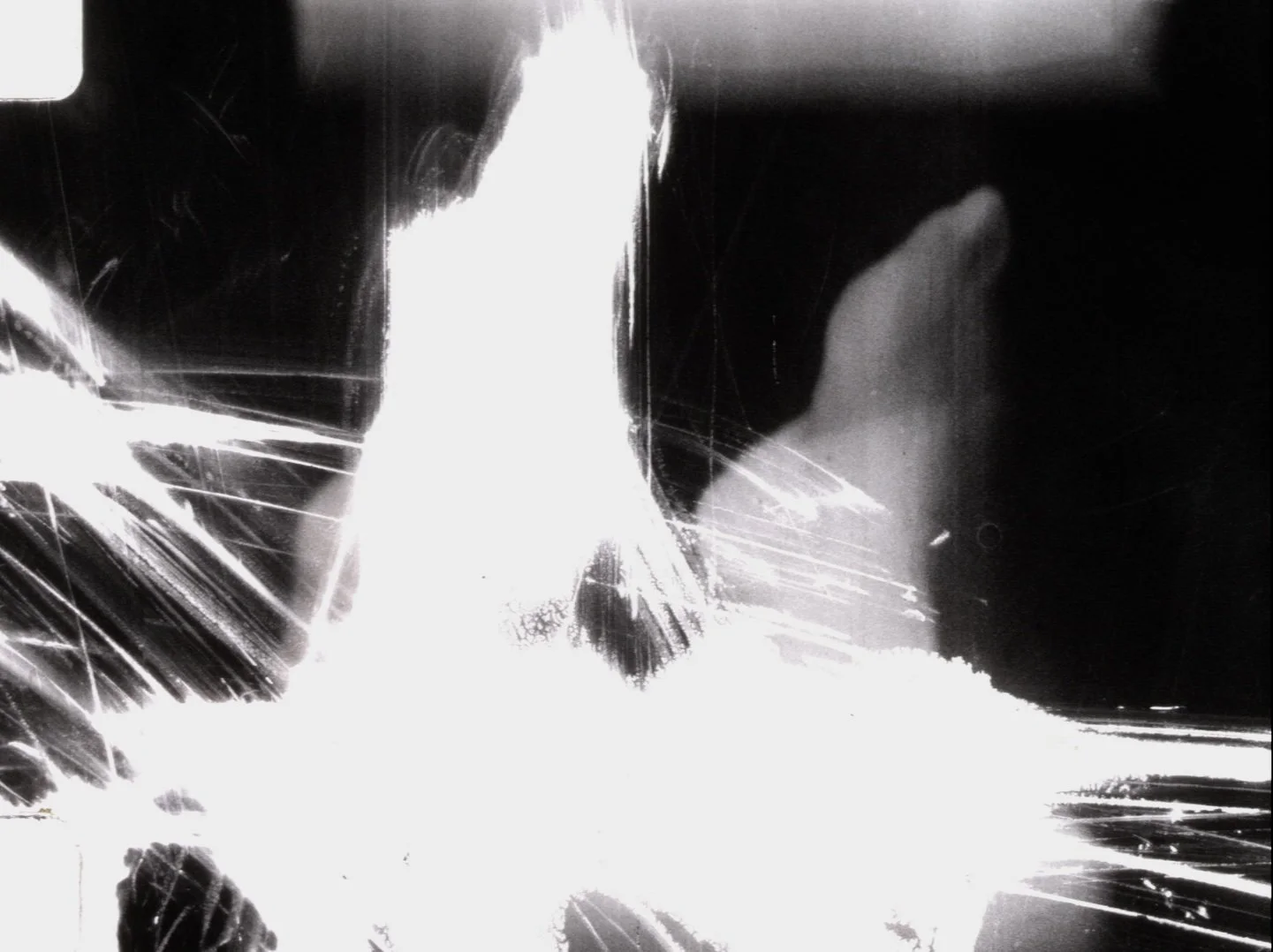
we need to establish a motive
★
a system that can be bent to permit slavery, colonialism, genocide, ecocide, war
★
Our jurisprudence? Who are you speaking for?
★
I think we need to approach this more obliquely
★
thinking about vs
thinking through—
★
★
★
Objection, your honour
★
The Age of Reason heralded some of the worst atrocities of history
★
The law is an instrument of colonisation & it imposes Eurocentric values by force
Law Professor Kenneth B. Nunn:
★
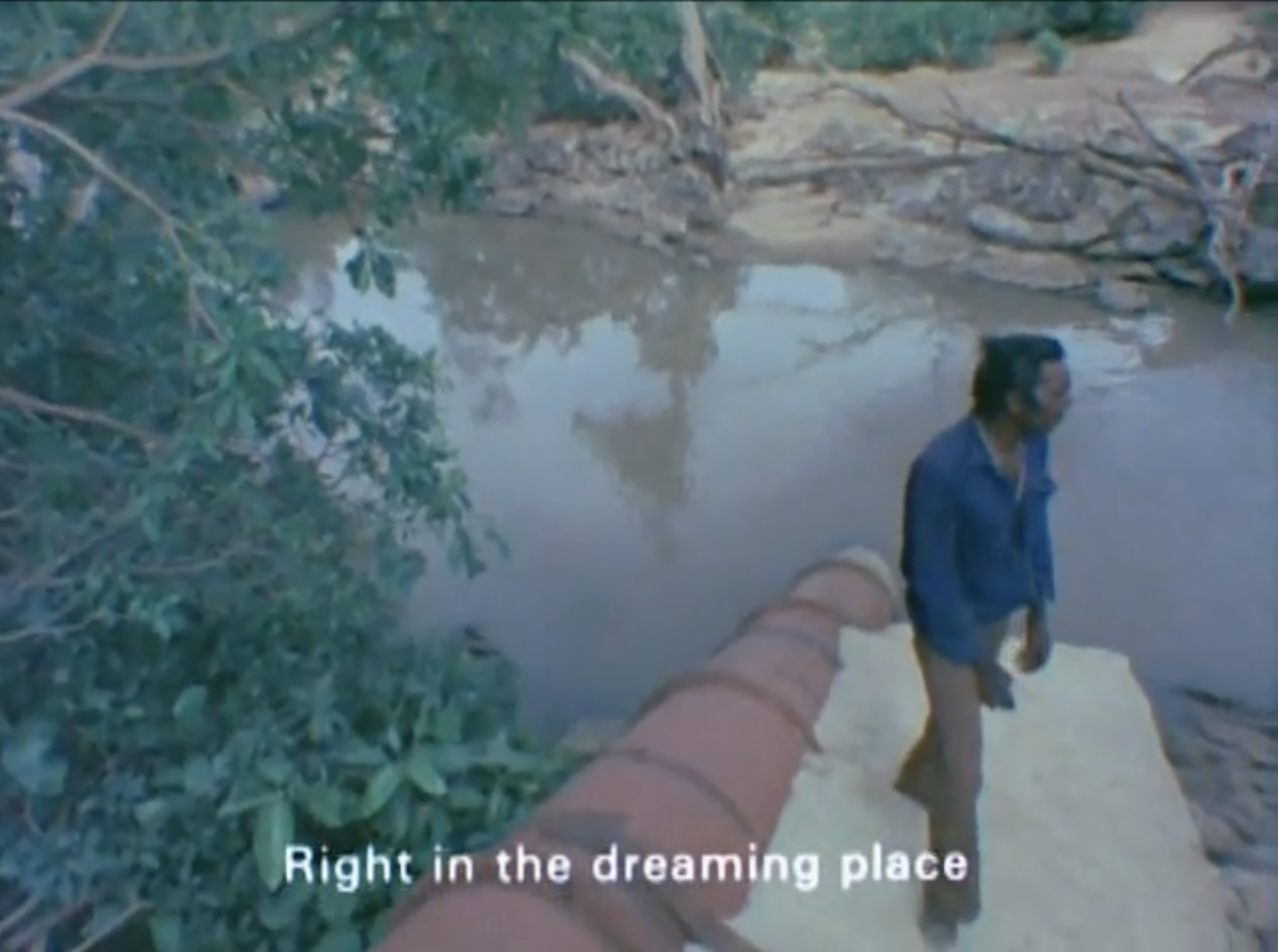
In many Indigenous cultures, legal customs are negotiated by the community and transmitted orally through song, story and ceremony. Scholar Tyson Yunkaporta says there is ‘law’ and there is ‘lore’—and the law is something that’s just ineffable and permanent and stored in the landscape.
★
we need to establish a motive
★
a system that can be bent to permit slavery, colonialism, genocide, ecocide, war
★
Our jurisprudence? Who are you speaking for?
★
I think we need to approach this more obliquely
★
thinking about vs
★
you cannot capture an image
★
One of the more persistent images of the subtle body [...] is the bird. When we try to grasp it without sufficient methodological finesse, it slips right through our fingers
—Simon Cox
★
Objection, your honour
★
The Age of Reason heralded some of the worst atrocities of history
★
The law is an instrument of colonisation & it imposes Eurocentric values by force
Law Professor Kenneth B. Nunn:
At the centre of European culture lies a complex of values that are profoundly materialistic. European culture is materialistic in both the ontological sense that the nature of reality is perceived in material terms and in the sociological/axiological sense that the acquisition of objects is the primary social goal.
★
In many Indigenous cultures, legal customs are negotiated by the community and transmitted orally through song, story and ceremony. Scholar Tyson Yunkaporta says there is ‘law’ and there is ‘lore’—and the law is something that’s just ineffable and permanent and stored in the landscape.
★
This waterhole is a rainbow snake dreaming place. In Aboriginal Law this sacred place and the country for miles around it is owned by the Gurdandji people. In European law it is leased by Mt. Isa Mines.
– off-screen dialogue and slide from the film Two Laws
★
Your honour [CLEARS THROAT]
is this really the highest court?
is this really the highest court?
★
how to tell the whole truth and nothing but the truth
when the stage is a lie
★
a documentary hybrid, loosely-scripted with nonactors and people playing themselves
★
★
the suspension of disbelief
★
★
and anyway, if we aren’t to step outside ourselves, how could you expect objectivity?
★
it is as if
★
reaching for common ground
★
when the object is to fly
★
but what do we do with the body?
★
what can we expect from the jury when
A frog in a well cannot be told about the sea.
– Zhuangzi, Daoist philosopher, 4th century BCE
★
the soul at large
★
let’s speak this film in whispers
there is a lot of shouting in the world right now
★
how would text in parenthesis appear in a film?
★
the door opens inwards
★
I woke up and I was floating, looking down at myself. It was as if someone had put a mirror in front of me
★
invisible ability
★
your request for diaphanous pages of paper
★
the portals within us
★
or something /
not exactly
★
you cannot arrest time or place
★
the moment leaks
★
How can we write in texture? Can we write in a way that is smoky / shimmering / grainy?
★
how projected film and the subtle body are like bodies of light
★
Thoughts are things,
Theosophical theorists Annie Besant and C.W. Leadbeater argue in Thought Forms.
Each definite thought produces a double effect—a radiating vibration and a floating form.
★
I used to think the starry sky was a sphere with holes
★
Is filmmaking a flattening?
★
the doubling of bodies and the doubling of meaning
★
★
SABINA (off-screen):
★
★
★
and no, there is no metaphor
★
invisible ability
★
your request for diaphanous pages of paper
★
the portals within us
★
or something /
not exactly
★
you cannot arrest time or place
★
the moment leaks
★
How can we write in texture? Can we write in a way that is smoky / shimmering / grainy?
★
how projected film and the subtle body are like bodies of light
★
Thoughts are things,
Theosophical theorists Annie Besant and C.W. Leadbeater argue in Thought Forms.
Each definite thought produces a double effect—a radiating vibration and a floating form.
★
I used to think the starry sky was a sphere with holes
★
Is filmmaking a flattening?
★
the doubling of bodies and the doubling of meaning
★
INT./EXT.
★
★
Wake up, it’s time to begin / The forgetting.
—Ben Lerner, poet
★
So don’t make me say it / It would burst the bubble / Break the charm
—Björk, singer-songwriter
★
and no, there is no metaphor
★
★
becoming fourth person
★
faith in the process
★
a widening
★
levity
★
[muffled disembodied voices]
★
that our mind sees this stream of images, 24 frames per second, as a representation of reality—evidence that we cannot trust our senses, not really
★
the burden of proof
makes it sound so heavy
★
The fact of the matter
★
Establishing shot:
★
in a sense, the limitation of cinema is its physicality, it’s a dominating mode of engagement with the viewer but the ruptures of experimental film offer spaces for intersubjectivity—for imagination to unfurl
★
inner space
★
interpenetrating
★
What most people overlook or seem unable to understand is the fact that I regard the psyche as real.
—Carl Jung
★
to set the record straight—
that binary thought is foundational to the mythology of modern law
★
The dichotomous reasoning found in Eurocentric cultures may be contrasted to the diunital form of reason prevalent in African and other non-European cultures. Diunital reasoning leads to ‘both/and’ conclusions and permits the consideration of information that is not neatly categorised or compartmentalised
—Kenneth B. Nunn, Legal Professor
★
‘beyond reasonable doubt’
★
There are no absolutes except this
—Author unknown
★
Dear Sabina, what happened at the workshop?
After the workshop, I could no longer travel in my dreams. It was as if someone there had stolen my ability to leave this plane.
How did you know it was gone? How was the absence felt?
I can only point toward it
★
To describe it is to destroy it—in particular,
the legal definition of anything
—Christopher Janke, poet
★
Lying at the southern end of the Milky Way’s visible band, [The Southern Cross] holds an
important place in Warlpiri law and in the legal systems of various other Indigenous groups
in Australia... It is a paradigm found in nature upon which all Warlpiri law is based, which
promotes understanding of how everything in reality is related to everything else. It
reminds us that we humans, at an atomic level, are made of the same stuff as all things in
creation, including the stars in the Southern Cross itself.
—Professor Marcia Langton AO and Professor Aaron Corn
★
unstuck in The Age of Reason
★
INT: COURTROOM. DAY.
There is a low hum of whispering voices, people are fidgeting, shuffling in their chairs, there is a woman with long nails typing next to the stand. CAMERA FOLLOWS her to the corner of the room where she sits down, trying not to be noticed.
There is a low hum of whispering voices, people are fidgeting, shuffling in their chairs, there is a woman with long nails typing next to the stand. CAMERA FOLLOWS her to the corner of the room where she sits down, trying not to be noticed.
★
or is she levitating?
★
the outcomes are not falsifiable
★
because it glows
★
does the subtle body need the gaze of the physical body?
★
just as the film must spill off the screen, in other ways
★
★
expanded cinema
★
★
bc as they say absence of evidence is not evidence of absence
★
bc atheism is irrational, recursively—you can’t prove that god doesn’t exist—
★
★
List of things that suck your soul:
★
stargazing at noon
★
The courtroom as the superego? Judge as symbolic father figure / your Catholic guilt / my intergenerational shame?
★
but it’s not a metaphor. or a dream
★
How about the law as imposing order over nature? Nature as fluid, indeterminate, wild, cyclic, non-binary—the law as discipline, boundaries, judgement, causality, etc... law moves in linearity / nature moves in spirals
★
law represses desire, intuition, freedom the astral plane is a realm without law as far as we know?
★
under oath, could we say
★
that the truth of it could simply be too bright
★
★
Watching the X-Files lately, I keep thinking about their catch phrase The truth is out there—it should be The truth is in here.
★
a way of being both/and
★
how to testify when
★
the experience is uncontainable
★
★
visions are things that you see with your eyes closed
★
★
★
expanded cinema
★
gathering in our peripheral vision
★
bc as they say absence of evidence is not evidence of absence
★
bc atheism is irrational, recursively—you can’t prove that god doesn’t exist—
★
As for the soul; why did I say I would leave it out? I forget. And the truth is, one can’t write directly about the soul. Looked at, it vanishes
—Virginia Woolf, author
★
List of things that suck your soul:
★
stargazing at noon
★
The courtroom as the superego? Judge as symbolic father figure / your Catholic guilt / my intergenerational shame?
★
but it’s not a metaphor. or a dream
★
How about the law as imposing order over nature? Nature as fluid, indeterminate, wild, cyclic, non-binary—the law as discipline, boundaries, judgement, causality, etc... law moves in linearity / nature moves in spirals
★
law represses desire, intuition, freedom the astral plane is a realm without law as far as we know?
★
under oath, could we say
★
that the truth of it could simply be too bright
★
The very liminality of the subtle body concept—inhering between worlds, between body and soul, between home turf and your Orient of choice—problematises the objectifying tendency of historical consciousness at every turn.
—Simon Cox
★
Watching the X-Files lately, I keep thinking about their catch phrase The truth is out there—it should be The truth is in here.
★
a way of being both/and
★
how to testify when
★
the experience is uncontainable
Have you ever had a dream that you, um, you had, your, you— you could, you’ll do, you— you wants, you, you could do so, you— you’ll do...
—Joe Cirkiel, viral YouTube subject
★
The aim of art is to prepare a person for death
—Andrei Tarkovsky, filmmaker
★
visions are things that you see with your eyes closed
★
and seeing is believing (as they say)
★
people with stars behind their eyes
★
★
★
Like how Mary Ruefle says she would rather wonder than know:
★
how fantasy & reality lean
★
could inform a nonlinear narrative
★
like the mobius strip theory of David Lynch’s Lost Highway—how Pete delivers the videotape to the other version of himself Fred—how it loops
★
★
do we need a verdict?
★
could we think with Romantic poetry, with John Keats’s notion of negative capability—pause your irritable reaching after fact and reason.
★
and think without the notion of cause & effect / the causal connection
★
maybe we just need to change the question
★
or even, stop thinking?
★
people of the jury, our plead,
★
★
‘What are you?’ / ‘To define is to limit.’
—Oscar Wilde, author
★
Like how Mary Ruefle says she would rather wonder than know:
wondering is a way of inhabiting and lingering […] dwelling […] Once we know, once we have the answer, we move on […] I would rather inhabit the question or dwell. For me, that is the place I want to live in.
★
how fantasy & reality lean
★
could inform a nonlinear narrative
★
like the mobius strip theory of David Lynch’s Lost Highway—how Pete delivers the videotape to the other version of himself Fred—how it loops
★
Do I contradict myself? / Very well then I contradict myself, / (I am large, I contain multitudes.)
—Walt Whitman, poet
★
do we need a verdict?
★
could we think with Romantic poetry, with John Keats’s notion of negative capability—pause your irritable reaching after fact and reason.
★
and think without the notion of cause & effect / the causal connection
★
maybe we just need to change the question
★
★
people of the jury, our plead,
★
in order to feel—intuitively—how badly
★
the world needs re-enchanting
Anita Maria Spooner is a writer and editor based in Naarm/Melbourne. She labours in the arts and moves horizontally through higher education. She was the founding editor of Free Association, an education platform for experimental art and writing. Her work concerns consciousness, metaphysics and the limits of materialist thinking.
Sabina Maselli is an artist and filmmaker based in Australia. Her work has been commissioned internationally at festivals, galleries, museums and online. She uses both analogue techniques and digital processing through a very physical and alchemical engagement with her materials. Her works act as sites for transformation between body, nature, memory and technology. She is a longtime member of the film collective Artist Film Workshop (AFW).
Image Descriptions:
1. Sabina Maselli, Creature Comfort: Pyramid Room Exit, 2019. Music video still. ID: Colour image of a woman in a white dress, lying down, facing her levitating subtle body of red, green and blue light, black background.
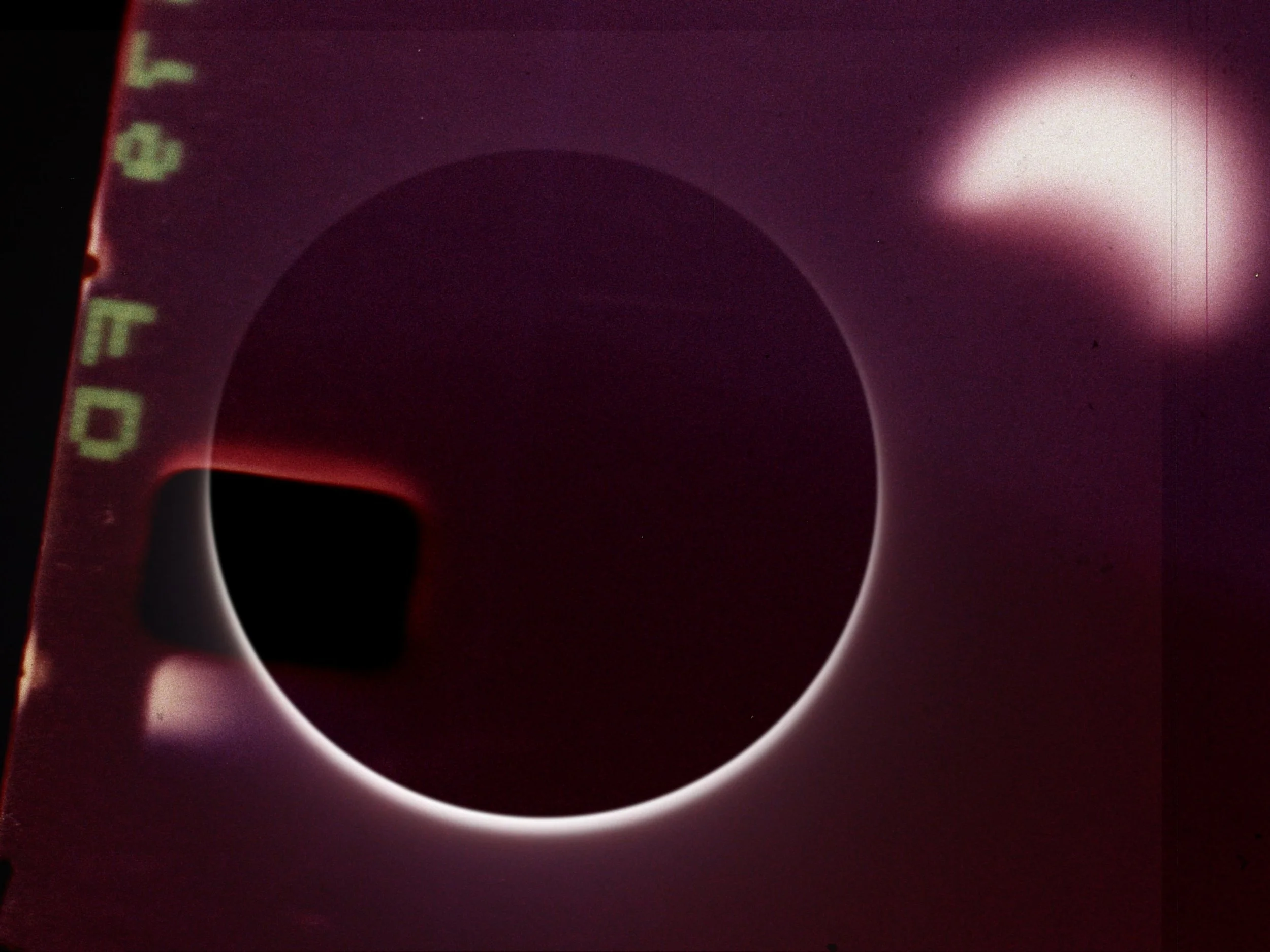
2. Sabina Maselli, untitled, 2024. 16mm film still. ID: Colour image of a lens flare against solar eclipse, blue/grey background.
3. Sabina Maselli, Latent image, 2021. 16mm film still. ID: Black and white image of feet in space, with handmade scratches on film, developed with light leak.
4. Alessandro Cavadini, Carolyn Strachan and the Borroloola Tribal Council, Two Laws, 1982. Film still. ID: Colour image of a man in blue shirt standing by a pipe at a waterhole. Caption reads ‘Right in the dreaming place’.
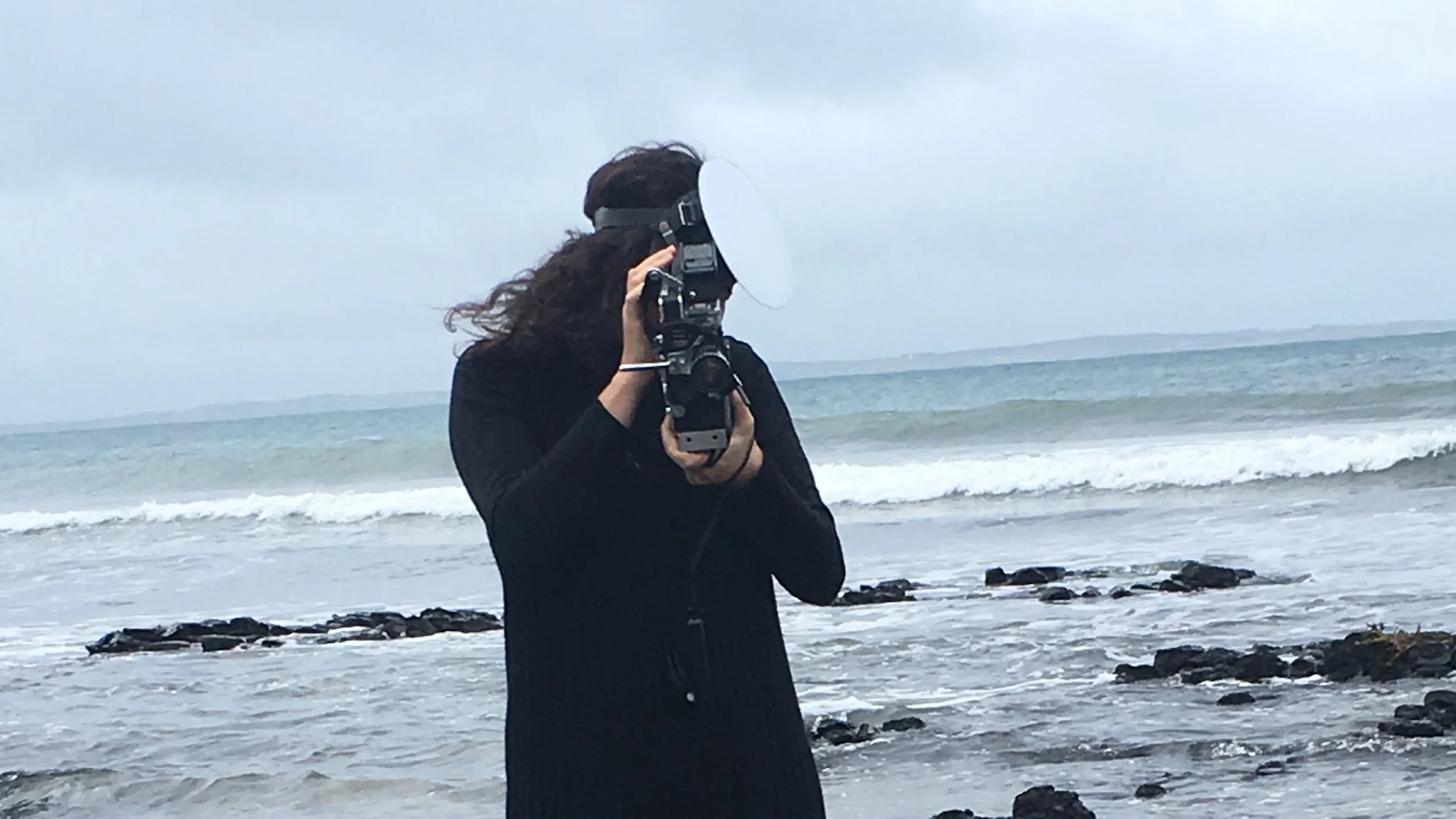
5. Sabina Maselli, untitled, 2019. Digital photo. ID: Black and white self portrait of filmmaker on the beach holding 16mm camera with round mirror attached.
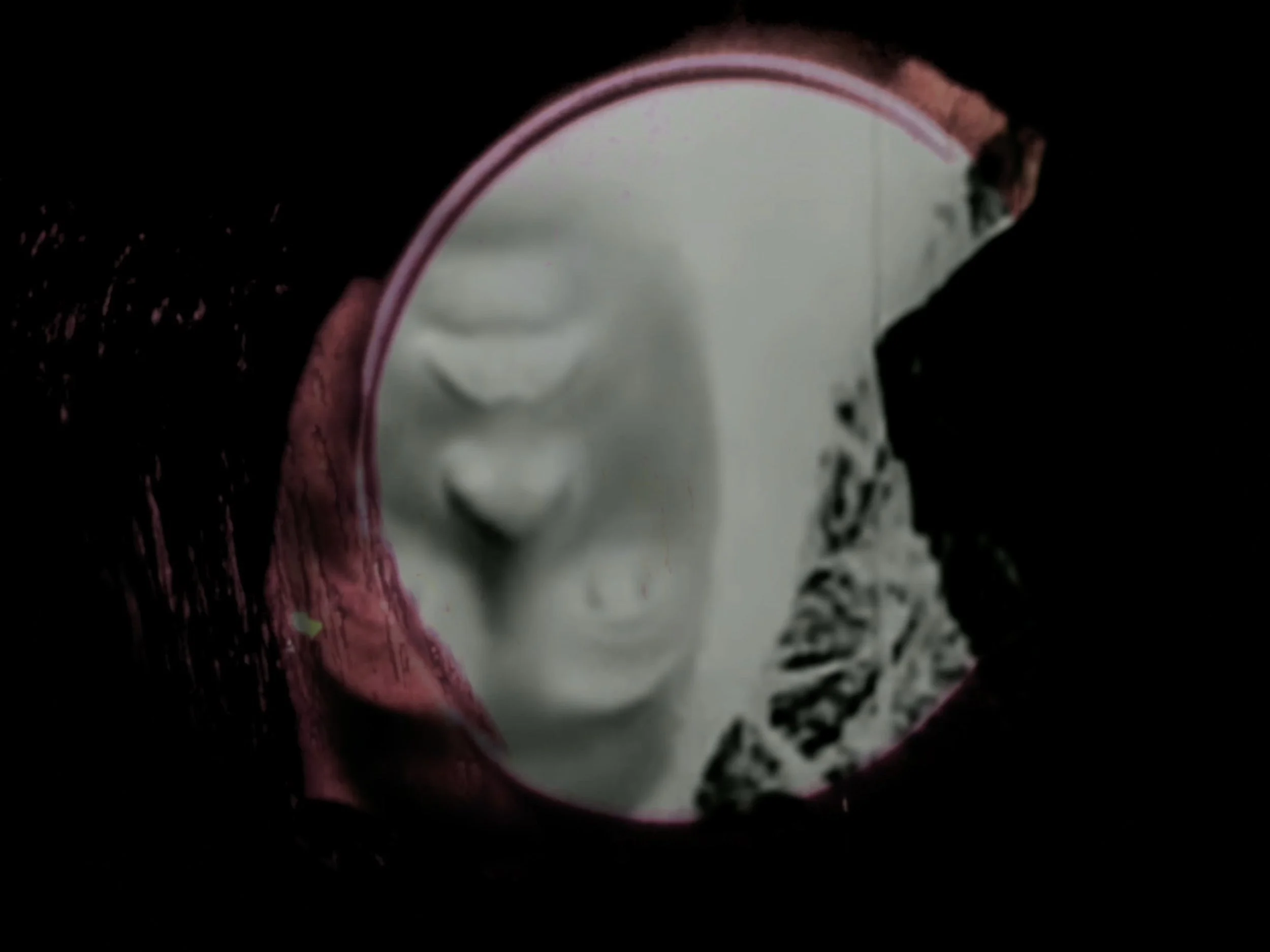
6. Sabina Maselli, 3 attempts to contact Maya, 2019. 16mm film still. ID: A woman’s face upside down in a broken mirror, held by another woman’s hands. Colour image with black and white negative still.
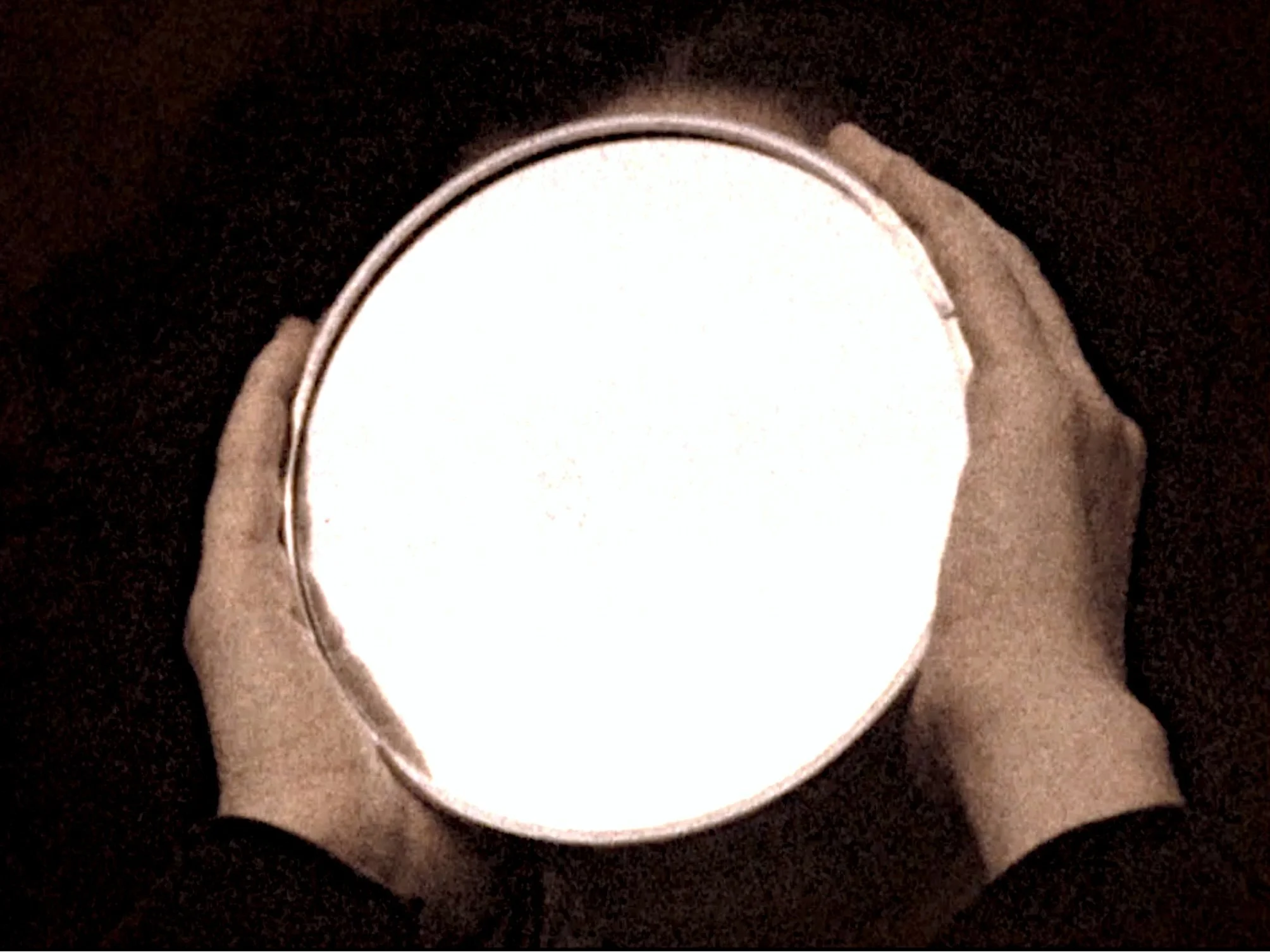
7. Sabina Maselli, Landing, 2019. 16mm film still. ID: Colour image of hands, disembodied, holding a round mirror reflecting white light, black background.
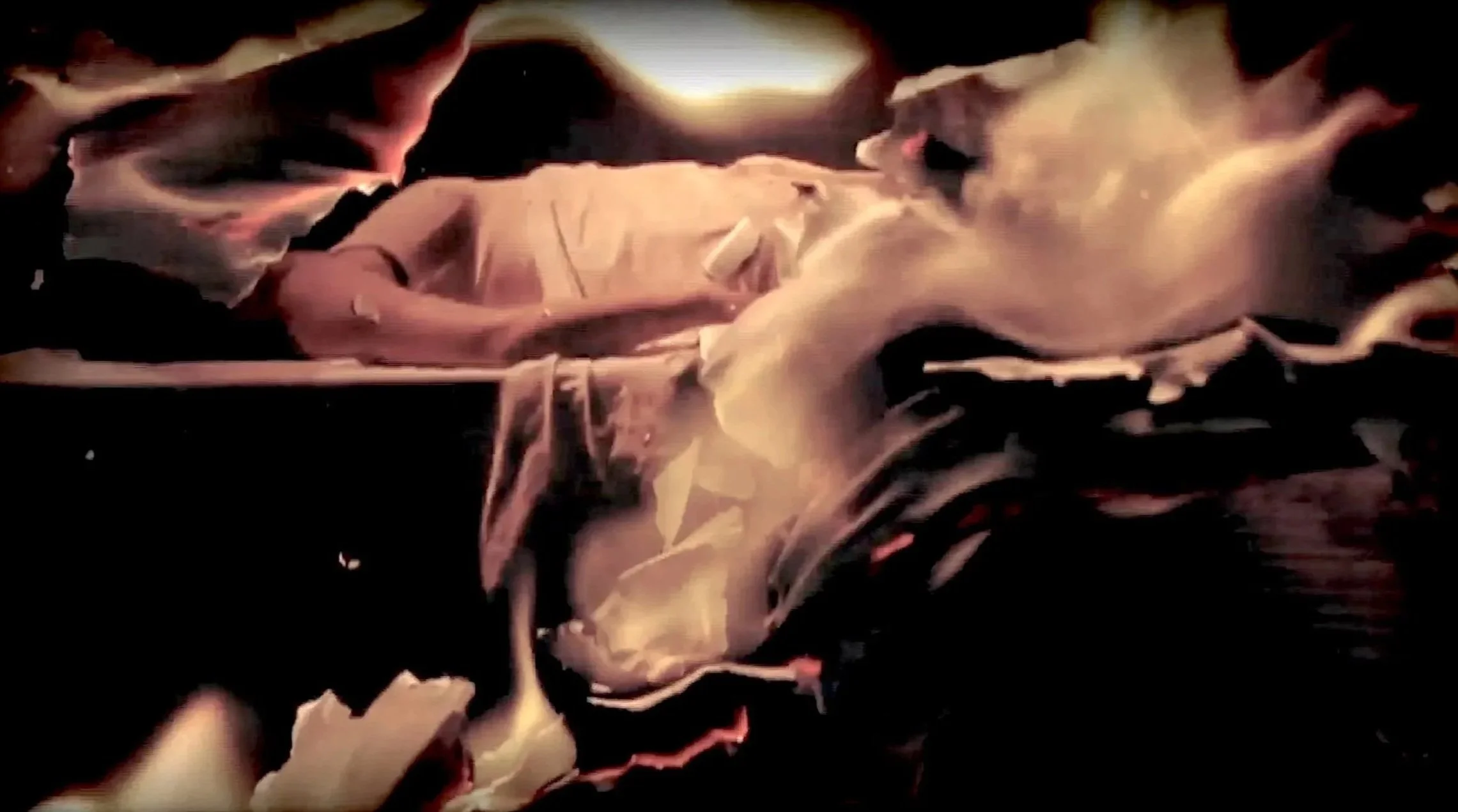
8. Sabina Maselli, Melting Point, 2014. Video still. ID: Colour image documenting the burning of a photo. The photo depicts a woman lying down on a bed covered in a white sheet.
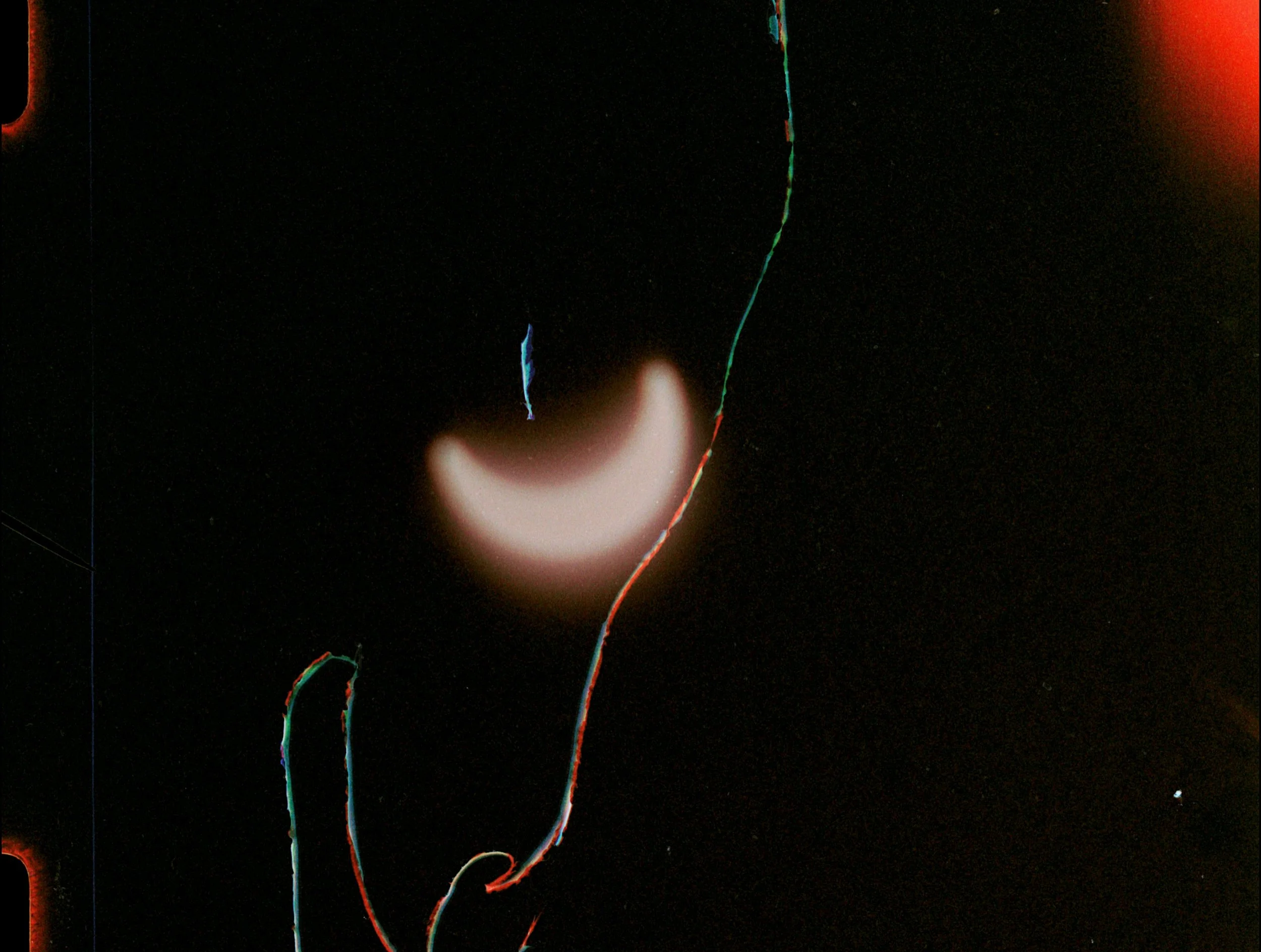
9. Sabina Maselli, untitled, 2026. 16mm film still. ID: Colour image of eclipses and perforations superimposed on image of celluloid film.
10. Sabina Maselli, Geometry of Faith, 2023. 16mm film still. ID: Colour film still of solar eclipse, night sky, double exposure using flat contact printing.
Sources:
Abrahams, Brad, dir. Love and Saucers: The Far Out World of David Huggins. Curator Pictures, 2017. eVideo.
Barrett, Frederick S., Matthew W. Johnson, and Roland R. Griffiths. ‘Validation of the Revised Mystical Experience Questionnaire in Experimental Sessions with Psilocybin.’ Journal of Psychopharmacology 29, no. 11 (2015): 1182–1190.
Besant, Annie, and C. W. Leadbeater. Thought Forms. Quest Books, 2015.
Björk. ‘Come to Me.’ Recorded 1991–93. Track 9 on Debut. One Little Indian Records/Elektra Records, compact disc.
Borroloola Tribal Council, Carolyn Strachan, and Alessandro Cavadini, dirs. Two Laws. 1981; Kanopy Streaming, 2015. eVideo.
Carson, Anne. Men In The Off Hours. Random House, 2011.
Cox, Simon. The Subtle Body: A Genealogy. Oxford University Press, 2022.
Gutting, Gary. Talking God: Philosophers on Belief. W. W. Norton and Company, 2016.
‘I Accidentally Became A Meme: Have You Ever Had A Dream.’ BuzzFeed Video. December 12, 2021. Video, 5:29.
‘Indigenous Law in Dialogue with Australian Labor: Marcia Langton and Aaron Corn.’ Labor Academy Victoria. September 14, 2023. Video, 1:23:35.
Janke, Christopher. ‘Using a Net to Catch the Air: Poetry, Ineffability, and Small Stones in the Shoe: A Lecturish.’ In Ineffability: An Exercise in Comparative Philosophy of Religion, edited by Timothy D. Knepper and Leah E. Kalmanson, 169–186. Springer, 2017.
Jung, Carl. Psychology and Religion: West and East. Routledge, 1970.
Jung, Carl. ‘13 March 1935.’ In Nietzsche’s ‘Zarathustra’: Notes of the Seminar given in 1934–1939, edited by James L. Jarrett, 441–54. Princeton University Press, 1988.
Keats, John. Selected Letters of John Keats: Based on the Texts of Hyder Edward Rollins. Edited by Grant F. Scott. Harvard University Press, 2009.
Langton, Marcia, and Aaron Corn. First Knowledges Law: The Way of the Ancestors. Thames and Hudson Australia/National Museum Australia, 2023.
Law Commission of Canada. Indigenous Legal Traditions. UBC Press, 2011.
Lerner, Ben. Mean Free Path. Copper Canyon Press, 2012.
Lynch, David, dir. Lost Highway. 1997; The Criterion Collection, 2022. eVideo.
Moreton-Robinson, Aileen. ‘The Possessive Logic of Patriarchal White Sovereignty: The High Court and the Yorta Yorta decision.’ Borderlands E-journal 3, no. 2 (2004): 1–9.
Naimon, David. ‘Mary Ruefle: An Incarnation of the Now.’ Produced by Milkweed Editions. Between the Covers. June 6, 2015. Podcast, MP3 audio, 1:01:47. https://milkweed.org/between-the-covers/mary-ruefle-an-incarnation-of-the-now.
Nunn, Kenneth B. ‘Law as a Eurocentric Enterprise.’ Law & Inequality 15 (1997): 323.
Rutt, Jim. Yunkaporta, Tyson. ‘282: Tyson Yunkaporta on Indigenous Law, Lore, and Learning,’ The Jim Rutt Show. February 6, 2025. Podcast, MP3 audio, 1:34:26. https://jimruttshow.blubrry.net/tyson-yunkaporta-3/.
Silverblatt, Michael. ‘Mary Ruefle: Madness, Rack, and Honey.’ Produced by KCRW. Bookworm August 30, 2012. Podcast, MP3 audio, 28:49.
Tarkovsky, Andrey, and Kitty Hunter-Blair. Sculpting in Time: Reflections on the Cinema. University of Texas Press, 1989.
Tzu, Chuang. The Complete Works of Chuang Tzu. Translated by Burton Watson. Columbia University Press, 1968.
Wang, Jackie. ‘Oceanic Feeling and Communist Affect.’ Friendship as a Form of Life (blog). June 26, 2017.
Whitman, Walt. Leaves of Grass. Edited by David S. Reynolds. Oxford University Press, 2005.
Wilde, Oscar. The Picture of Dorian Gray. Lerner Publishing Group, 2015.
Woolf, Virginia. Virginia Woolf: A Writer’s Diary: Enriched Edition. DigiCat, 2023.